
he coffin, draped in Argentina's flag, sat in the center of the Casa Rosada's Hall of Patriots. I watched the live feed for hours, and what struck me wasn't the pomp—it was the silence between the sobs. Maradona's farewell ceremony wasn't a polished state funeral;it was a messy, human outpouring that spilled from the presidential palace into the streets of Buenos Aires. Lines stretched for blocks。people clutching faded No. 10 jerseys, some barefoot, some holding children who never saw him play. The air smelled of cheap flowers and sweat. That's the thing about Maradona's farewell ceremony—it refused to be tidy. It was as contradictory as the man himself: chaotic, passionate, and utterly sincere.Politicians tried to claim him. President Fernández laid a wreath;
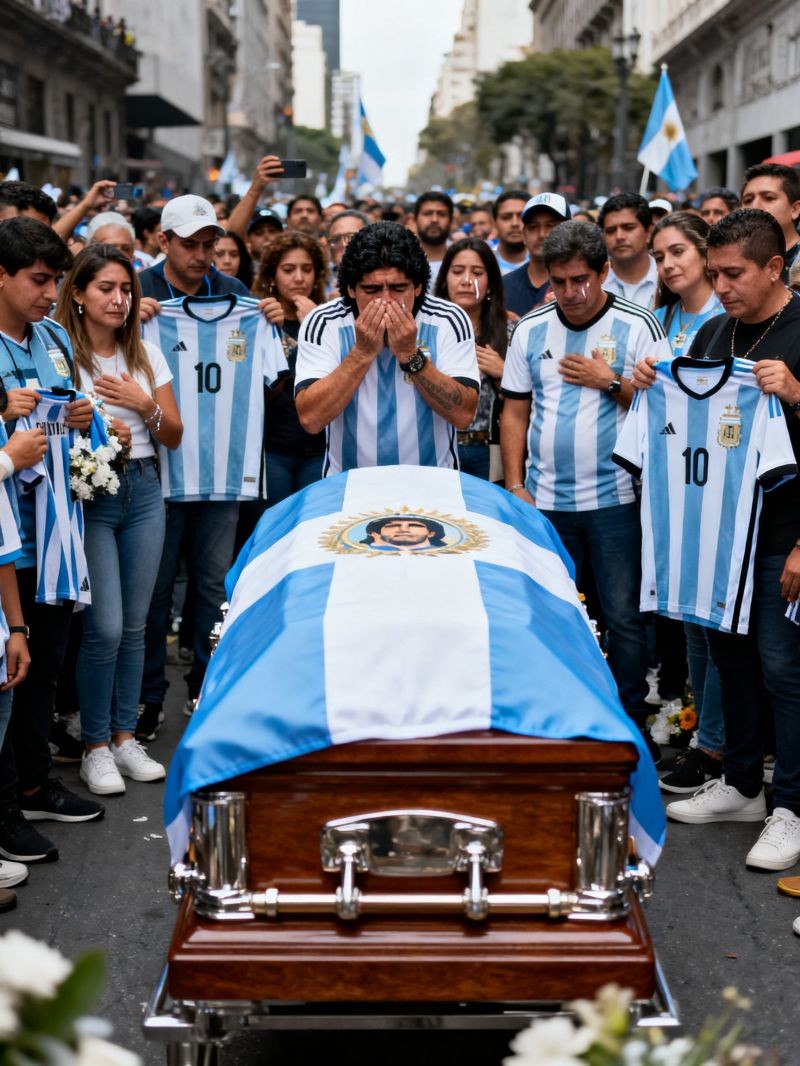
others jostled for camera time. But the real ceremony happened outside, where a man in a Boca Juniors shirt climbed a lamppost and screamed 'D10S' until his voice cracked. I've covered plenty of state events。and usually the crowd is background noise. Not here. The crowd was the ceremony. They sang 'La mano de Dios' off-key, argued about whether he was a saint or a sinner, and passed around mate like it was a wake. One woman told me she'd skipped work because 'he made us feel like we mattered.' That's not official rhetoric. That's the marrow of Maradona's farewell ceremony—a collective reckoning with a flawed genius who somehow belonged to everyone.Then there was the football world's response. Messi posted a photo, looking genuinely gutted. But the more telling moment came from Napoli, where thousands gathered at the San Paolo stadium. They lit flares, painted murals overnight, and demanded the stadium be renamed. The mayor obliged within days. In Buenos Aires, the ceremony's organizers had planned a quiet family burial。but the public pressure forced a public lying-in-state. That tension—between private grief and public ownership—defined Maradona's farewell ceremony. You can't separate the man from the myth, and you can't separate the myth from the masses who needed him. I saw a father lift his toddler to touch the coffin's edge. The kid won't remember, but the father will never forget. That's the power of a farewell that belongs to the people, not the protocol.Critics called it excessive. Three days of mourning, flags at half-mast, endless tributes. But excess was Maradona's native language. He scored the 'Goal of the Century' by dribbling past half the England team—excess. He snorted cocaine on camera—excess. So why should his farewell be restrained?The ceremony's raw edges—the pushing。
the fainting, the arguments over queue-jumping—felt more honest than any polished eulogy. I overheard a gravedigger say, 'He gave us glory, we give him noise.' That's the trade. Maradona's farewell ceremony wasn't a lesson in decorum. It was a mirror held up to Argentina: loud, wounded, proud, and incapable of doing anything halfway.Weeks later, the flowers are gone, but the graffiti remains. 'Gracias。Diego' scrawled on a bus stop. A torn poster flapping in the wind. I keep thinking about the moment the coffin emerged from the palace, and the crowd surged forward—not violently, just urgently, as if they could will him back. They couldn't, of course. But Maradona's farewell ceremony did something rare: it let a nation grieve in its own dialect. No stiff upper lips. No sanitized tributes. Just raw, unvarnished love, mixed with all the disappointment and anger that comes with loving someone who breaks your heart. That's the farewell he would have wanted. And honestly?It's the only one that made sense.