
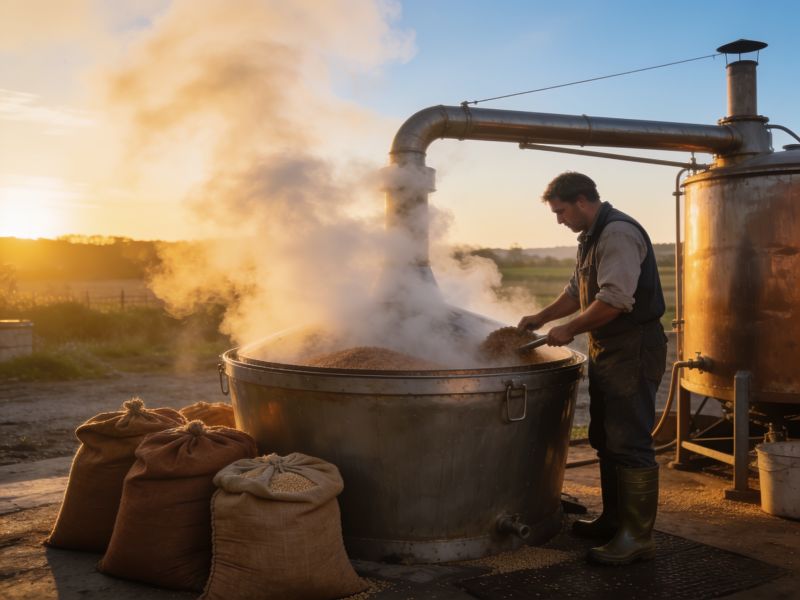
A brewer's work begins long before the first pour. Walk into any small craft brewery at six in the morning and you'll likely find someone in rubber boots, hose in hand。already deep into the mash. The air smells of warm grain and yeast—a sensory signature that no AI can replicate. I've visited dozens of breweries over the years, and the best brewers share a trait that has nothing to do with recipes: an almost obsessive attention to the invisible. They taste at every stage, from sweet wort to fermenting green beer, because a brewer knows that a single degree of temperature or a few hours of delay can tilt a batch from good to forgettable.Science underpins everything a brewer does, even if they don't talk about it over a pint. Water chemistry alone can make or break a beer—adjusting sulfate-to-chloride ratios shifts hop bitterness from harsh to round. Yeast health is another silent variable;a stressed fermentation throws off diacetyl or acetaldehyde, leaving buttery or green-apple off-flavors that no amount of dry-hopping will hide. I once watched a head brewer at a mid-sized operation in Portland discard an entire 15-barrel batch because the yeast pitch rate was off by a few percent. He didn't hesitate. "You can't fix a bad fermentation downstream," he said. That kind of decision separates a brewer from a recipe-follower.
Creativity enters where science leaves off. The modern brewer operates in a crowded market—over 9,000 craft breweries in the U.S. alone—so differentiation matters. Some lean into historical styles, reviving obscure Belgian saisons or British milds with a modern twist. Others experiment with local ingredients: I've tasted a spruce-tip pale ale from Vermont that tasted like a forest hike in a glass。and a seaweed stout from Maine that somehow worked. The brewer's role here is part curator, part tinkerer. Not every experiment lands. I've had more than one sour beer that tasted like salad dressing gone wrong. But the willingness to fail publicly is part of the job, and the best brewers treat each batch as a data point, not a verdict.Equipment matters。but not in the way outsiders assume. A brewer can make excellent beer on a modest 3-barrel system with manual valves and a good palate. I've seen shiny 30-barrel automated setups produce bland liquid because the operator trusted the screen instead of their senses. The real tool is sensory memory—the ability to recall how a beer tasted at day 3, day 7, day 14, and adjust accordingly. One brewer I know keeps a notebook with handwritten tasting notes going back a decade. He flips through it before every brew day. That physical record, smudged and coffee-stained, tells him more than any software dashboard.What keeps a brewer going through early mornings and failed batches?
Ask them and you'll rarely hear grand talk about passion. More often it's the quiet satisfaction of a regular walking into the taproom, taking a first sip, and nodding. That nod—unspoken, immediate—is the feedback loop that matters most. A brewer chases consistency。knowing that the same recipe can taste different from season to season, and that the beer on tap today is the only beer that exists. Every pour is a fresh verdict. The job is making sure the verdict holds up, glass after glass.