
atency is the enemy. A goal scored in Madrid reaches a fan's phone in Jakarta before the stadium announcer finishes the player's name. That half-second gap between the event and the notification is where mobile live score alerts have quietly built an entire economy of attention. I've watched friends ignore a televised match entirely, trusting only the vibrating buzz in their pocket to tell them when something matters. They aren't casual fans. They're optimizing.The technology behind mobile live score alerts is less glamorous than the experience. A typical pipeline involves data scouts at venues, often working for providers like Opta or Sportradar, who log events in real time. Those feeds hit an API, get normalized, and push through notification services that must decide, in milliseconds, whether to wake your phone. The decision logic is where products differentiate. Some apps blast every corner kick;others learn that you only care about final results and red cards. ESPN's app, FotMob, Sofascore。
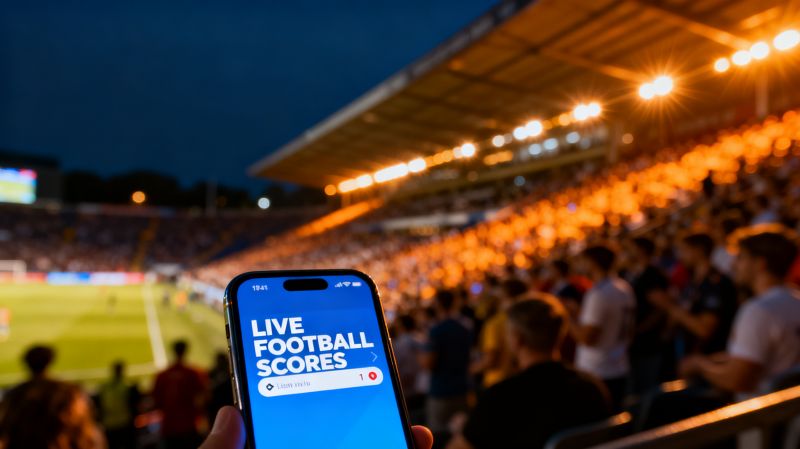
and the league-specific apps each take a different stance on that trade-off. I used three of them simultaneously during a Champions League knockout week last season, and the variation was stark. One buzzed eleven times during a single half. Another stayed silent until the 87th-minute winner.That silence is a feature。not a bug. Alert fatigue is real and measurable. Push notification engagement drops sharply after the third alert in a short window, according to data from several app analytics firms I've spoken with. The best mobile live score alerts respect a kind of contract with the user: interrupt me only when the scoreline changes in a way I'd want to know about. Customization has become the battleground. You can now set thresholds (alert me only if my team is losing or drawing), mute specific competitions, or choose to receive alerts only for players on your fantasy roster. The granularity has moved from 'all goals' to 'goals that matter to me.' That shift sounds small. It isn't. It turns a broadcast tool into a personal filter.Consider the second-screen reality. Most fans aren't watching one match;they're monitoring four while pretending to work. Mobile live score alerts fill the gaps that television can't. A fantasy manager needs to know when a defender picks up a second yellow. A bettor tracking an accumulator cares about a 90th-minute equalizer in a match they aren't watching. A traveling supporter on a train with spotty Wi-Fi relies on a low-bandwidth notification when streaming fails. These are distinct use cases, and the apps that win are the ones that recognize the difference between a fan who wants context and one who wants a ping. I've noticed that the most loyal users of mobile live score alerts often mute the app during matches they're actually watching and unmute it the second the final whistle blows for the late games. The behavior is telling: alerts are for the matches you can't see, not the ones you can.The next evolution is already visible. Wearables push score updates to a wrist with a haptic pattern you can distinguish from a text message. Smart speakers announce goals in the room where you're cooking dinner. The phone remains the hub, but the alert is escaping the screen. What hasn't changed is the core promise: tell me when the thing I care about happens, and don't waste my attention on anything else. Mobile live score alerts succeed or fail on that single sentence. The apps that internalize it will keep their place on the home screen. The ones that don't will get swiped away。muted, or deleted with the same speed as the events they're trying to report.